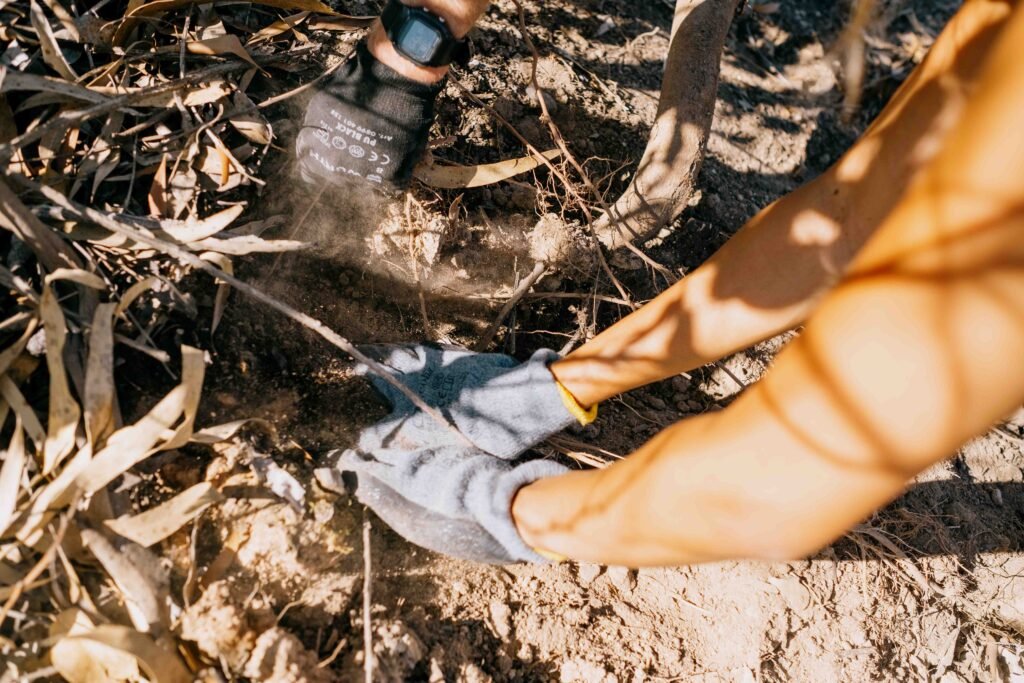
In the face of the climate crisis and biodiversity loss, many people feel powerless. Problems such as plastic waste, overfishing and species extinction seem abstract and unsolvable. Small, community-based projects show that change is possible. Whether it’s buying land for rewilding projects, community forests or urban wild gardens, collective action has an enormous impact and strengthens confidence in one’s own ability to take action.
At Sylvester Rewilding, we approach this topic in our own distinctive way. Our aim is to purchase land together and return it to nature. Through our work restoring degraded land with long-term, community-supported rewilding, we see every day how closely ecological restoration and human well-being are intertwined. This connection becomes even more apparent when looking at the role that green and blue spaces play in supporting our health.
Taking action supports mental health as well as the planet’s health. Small steps are a start; they plant seeds of hope. Of course, they cannot change the world overnight. At its heart: Every mighty tree began as a tiny seed, endured dry and difficult seasons, and grew into a self-sustaining ecosystem. Studies show that blue spaces and green spaces improve people’s well-being and that healthy, committed people in turn benefit nature. This creates a stable, positive cycle between humans and nature.
The Psychology of Blue and Green Spaces
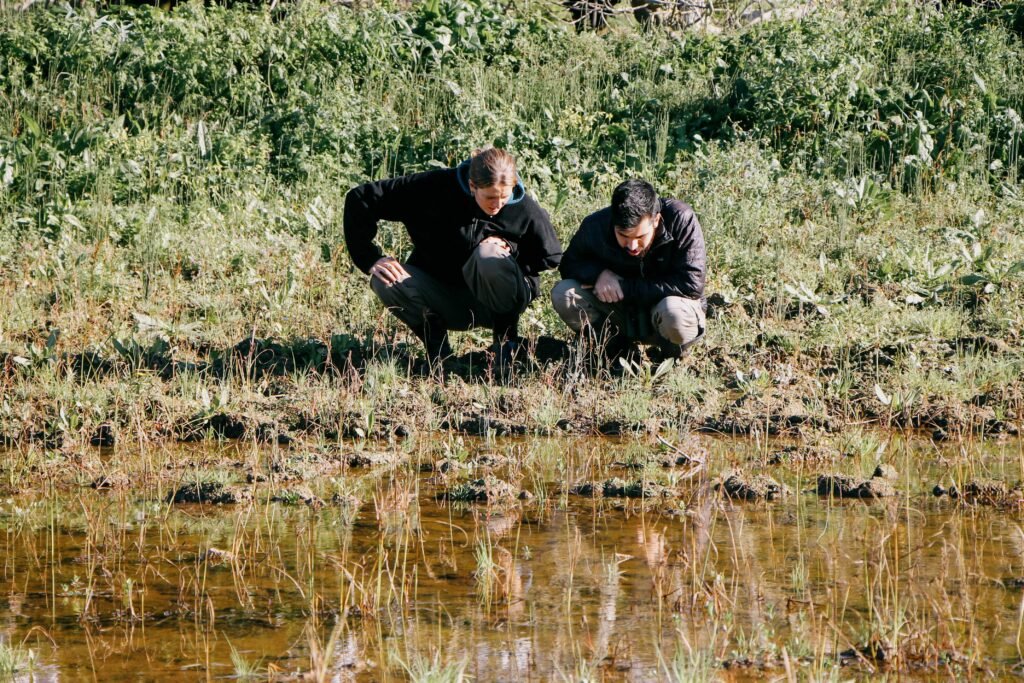
Green spaces and water areas in cities are much more than just beautiful places to walk. A review study by Easkey Britton and colleagues (2020) shows, for example, that so-called ‘blue spaces’, places near water such as rivers, lakes or even fountains – can noticeably increase well-being. People feel more relaxed there, recover more quickly from everyday stress and find it easier to socialise. Green spaces also play an important role: in a large-scale study, Alessandro Rigolon and his team (2021) were able to prove that parks and green spaces improve the health of many city dwellers – especially those living in more disadvantaged neighbourhoods.
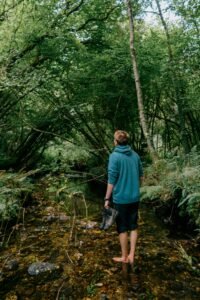
However, green and blue spaces should not be viewed independently of one another. They complement each other and offer both conscious and unconscious relaxation. Not only do they provide relief for the eyes and breathing, but feeling nature on our skin can also bring us back to the here and now.
This means that trees, meadows and water areas are not luxury extras, but genuine health resources that can also help to bridge social divides. For us, this sends a clear signal to urban planners: investing in green and blue spaces not only creates more beautiful cities, but also healthier ones.
Benefits of taking action
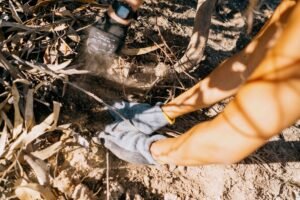
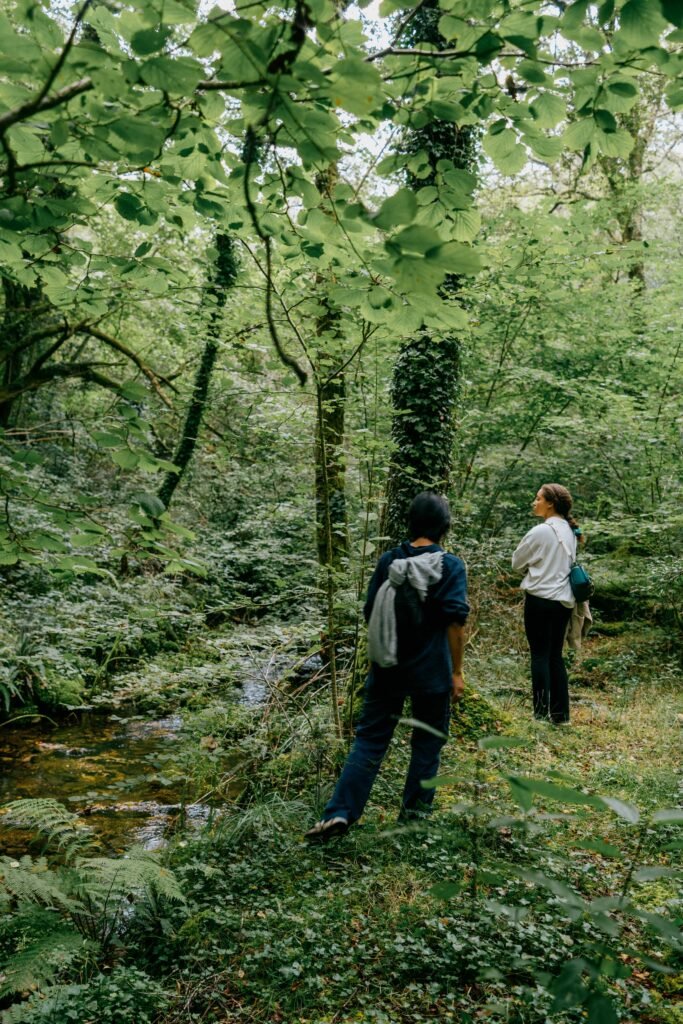
When we take action, something exciting happens: we do good for nature as well as for ourselves. At Sylvester Rewilding, we experience the impact of collective action first-hand: land is bought back, rewilded and habitat for endangered species is created. At the same time, a space is created where people can experience new hope and community. Anyone who takes part in a planting campaign or tends a community garden immediately feels their stress levels drop and their sense of empowerment grow. “I remember doing this in my parents’ garden – getting my hands dirty always made me feel good,” says Julius Wenzel, one of our founders.
Studies confirm that people who regularly spend time outdoors in nature are less likely to suffer from anxiety or depression. At the same time, soil, trees and animals benefit directly from our efforts. “Here in Portugal in particular, we really see the difference: when we plant something and re-green the land, you can feel new life emerging,” says Wenzel. It creates a win-win situation: we do something good for ourselves, and the planet breathes a sigh of relief.
Plant your own Seed of Hope
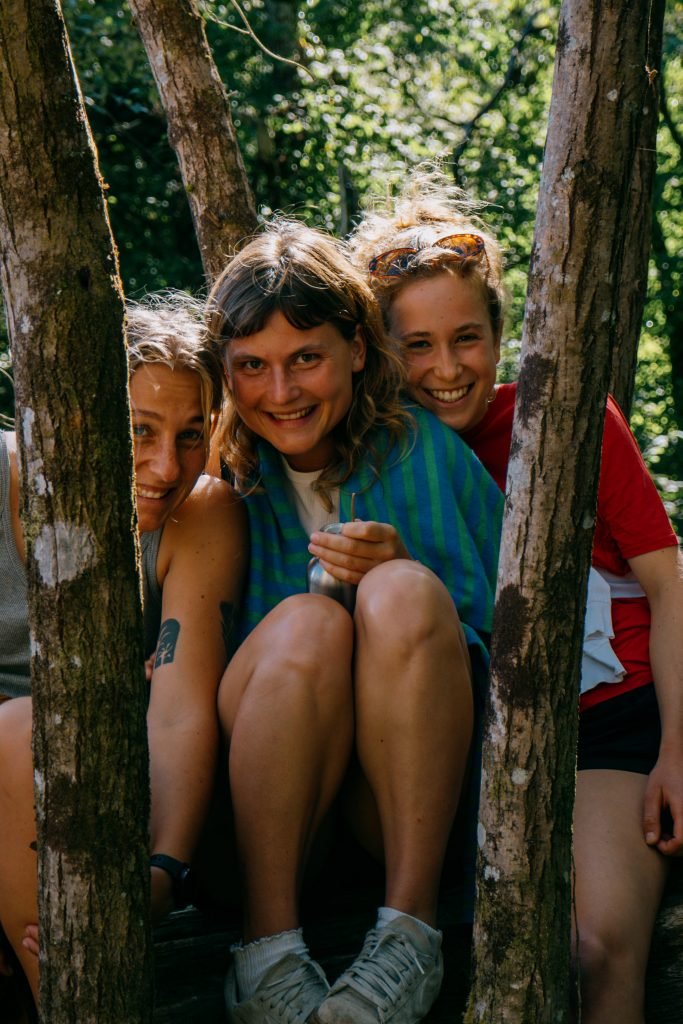
You don’t have to start a project like ours to make a difference. Even small steps count: perhaps you could plant wildflowers on your balcony, campaign for more trees in your street or take part in a local litter collection campaign. If you’re interested in community involvement, many cities have urban gardening projects or initiatives to protect green spaces. Sitting around and slipping into a downward spiral of thoughts should never be an option. Action gives us the strength to break out of powerlessness and not remain stuck in it. It’s not the size of the action that matters, but the attitude behind it: every little seed we plant – whether on your balcony or rewilded land – helps to make hope grow.
Reference:
Britton E, Kindermann G, Domegan C, Carlin C. Blue care: a systematic review of blue space interventions for health and wellbeing. Health Promot Int. 2020 Feb.
Rigolon A, Browning MHEM, McAnirlin O, Yoon HV. Green Space and Health Equity: A Systematic Review on the Potential of Green Space to Reduce Health Disparities. Int J Environ Res Public Health. 2021 Mar.