A field visit through four thriving ecosystems in Galicia, exploring how rewilding, natural grazing, and ecosystem restoration are shaping a wilder future.
Share This Post
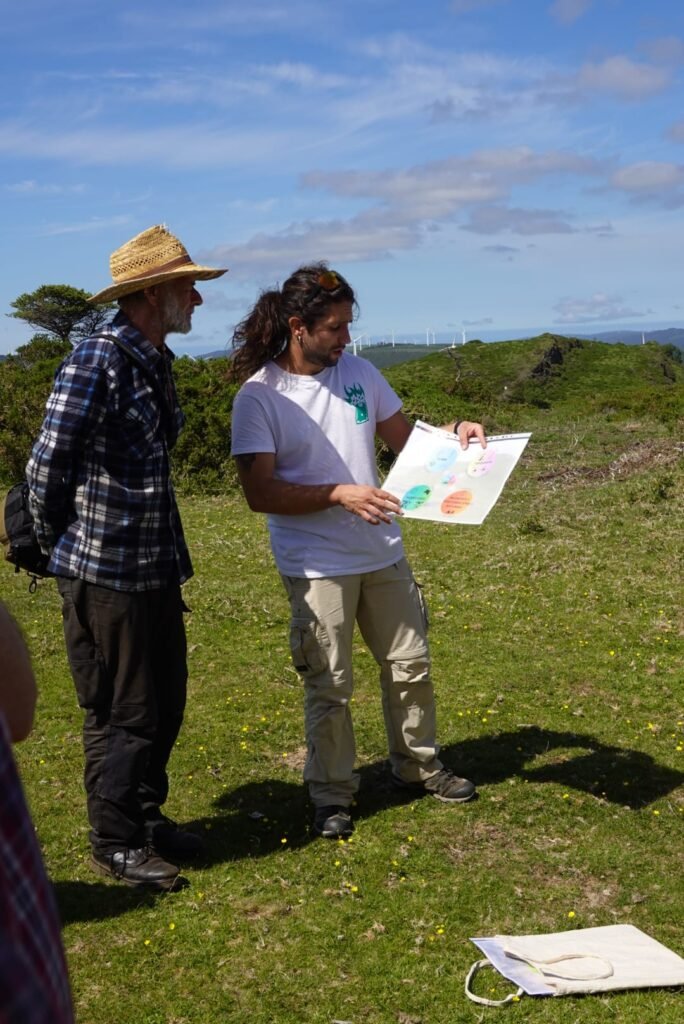
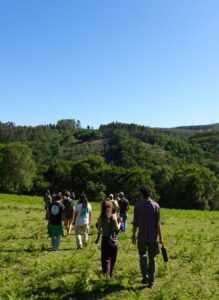
This past Saturday, our Galicia team organised a visit to an ongoing, multi-year rewilding project in Galicia, guided by two incredible experts: Juan, owner of the lands, who has been managing the project on the ground for years, and Xose, a university rewilder who has been supporting the initiative from an academic perspective.
Taming the Gorse
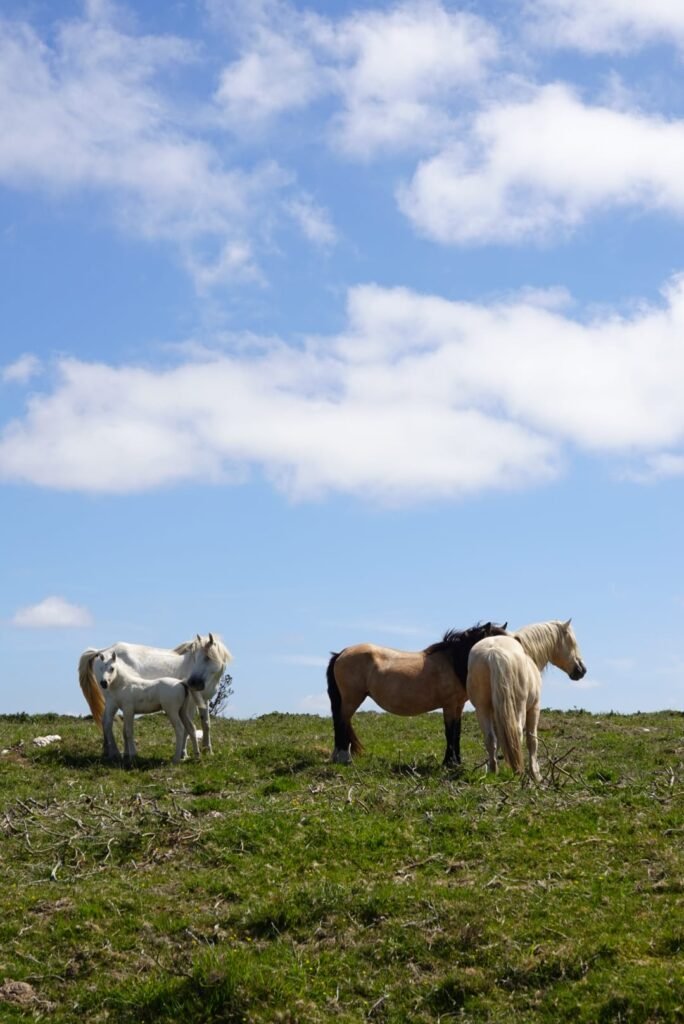
Our journey began in the heathlands and shrublands. Juan explained that when they first started the project, the landscape was choked by a massive overgrowth of gorse. It was so high and dense that it was entirely impassable. To kickstart the ecosystem, they initially had to bring in machinery to cut it down. But the real magic happened when they introduced the heavy lifters: wild horses and cows.
We learned how this dynamic duo works in perfect harmony to maintain the habitat and preserve the native heather:
The Horses: They act as the trailblazers, nibbling on the tough gorse and carving out open paths through the thick brush.
The Cows: They follow right behind the horses, feeding on the heather and keeping the rest of the shrubbery under control.
Right now, the vegetation is still kept quite low, but the ultimate vision for this rewilded shrubland is beautiful. Over time, it will transform into a mosaic of “little islands” of heather and gorse. This structural diversity creates the perfect habitat for a rich variety of birds and reptiles, including native snakes and salamanders.
The Power of the Peatland
Leaving the heathland behind, we continued our journey downward, passing through a stunning stretch of semi-wild grazing land. Here, native trees formed a canopy above while the cows and horses grazed happily below.
Our next destination was perhaps the most fascinating: a local peatland. Xose and Juan explained that despite their unassuming appearance, peatlands are some of the most potent carbon sequesters on Earth, even more effective than the Amazon rainforest. Because the environment is completely saturated with water, organic material is trapped and stored without breaking down, locking away massive amounts of carbon.
However, this constant waterlogging means the soil is incredibly starved of nutrients. We got to see this survival struggle in action: a native carnivorous plant. Because the peatland soil offers them nothing to feed on, these clever plants have evolved the ultimate backup plan, capturing and eating mosquitoes just to survive.
Into the Fraga
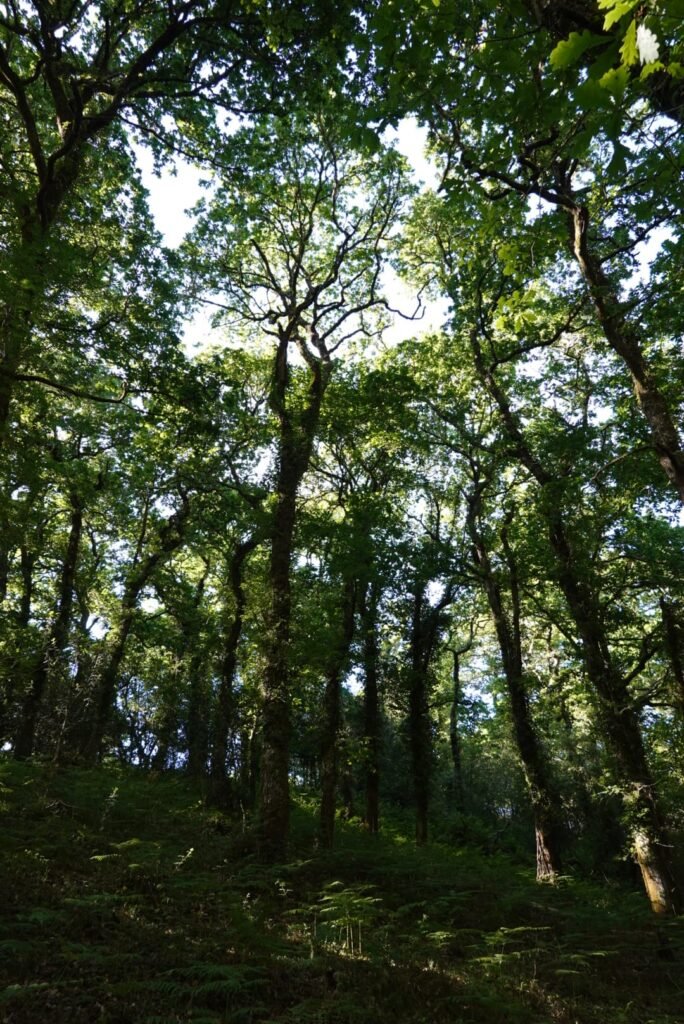
From the peatlands, we descended into the Fraga, the traditional name for the native, Atlantic rainforest of Galicia. The canopy here was a rich tapestry of native tree species, including many different types of oak trees, chestnuts, and wild pear trees. It was incredible to see the forest in all its different life stages, from towering, ancient giants to fresh, young saplings pushing their way up.
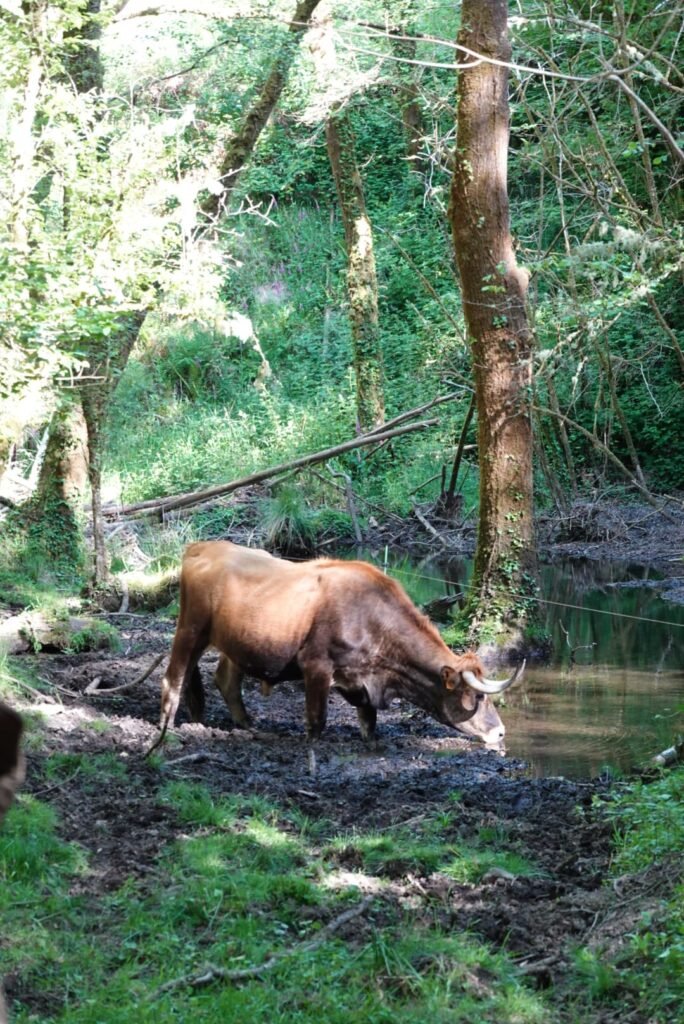
We followed the path all the way down to the banks of the river. Riverbeds like this are vital arteries for a rewilded ecosystem, teeming with biodiversity. While we were there, we watched a cow wander down from the grazing lands to the river’s edge for a drink. Juan mentioned that the cattle also love to venture into the forest to feed on the wild blueberries that grow under the canopy.
A Tale of Two Forests
Standing by the river provided a stark, eye-opening lesson in ecology. Directly across from our vibrant, healthy Fraga, on a plot of land that didn’t belong to Juan, was a commercial eucalyptus plantation.
The contrast couldn’t have been more dramatic. While our side of the river was lush and thriving, the eucalyptus monoculture showed severe signs of environmental distress. We could see significant soil erosion and numerous fallen trees. It was a powerful, real-world illustration of how poor and unstable the soil becomes in a monoculture plantation compared to the deep, resilient root systems of a healthy, native forest ecosystem.
Community and Closing
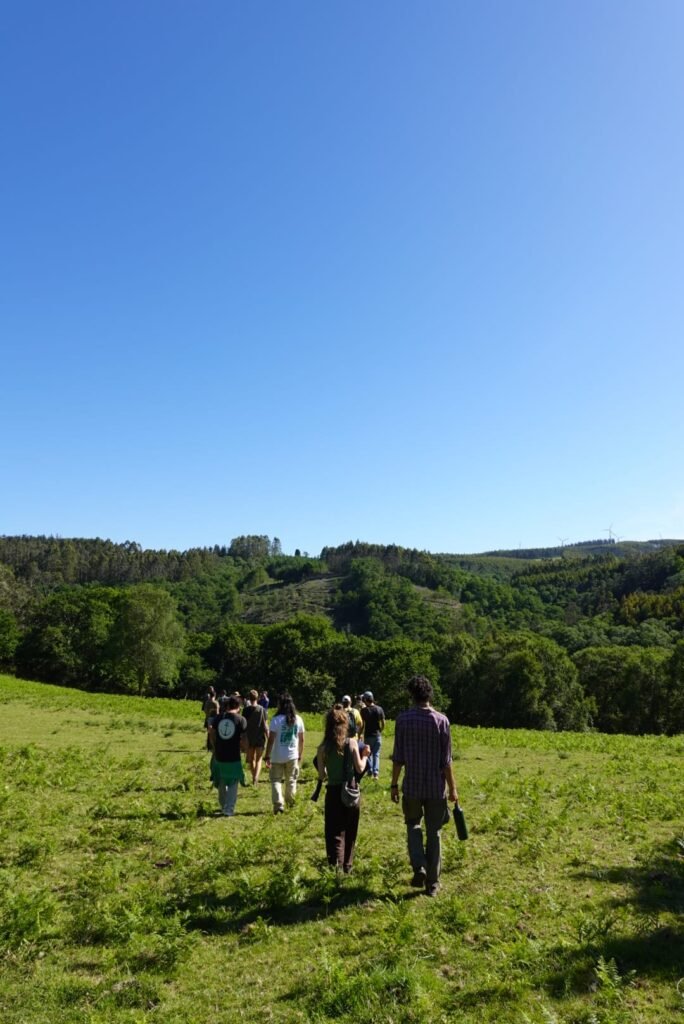
With our minds full of new insights, we hiked back up the mountain to Juan’s house, a beautifully renovated, traditional Galician stone house.
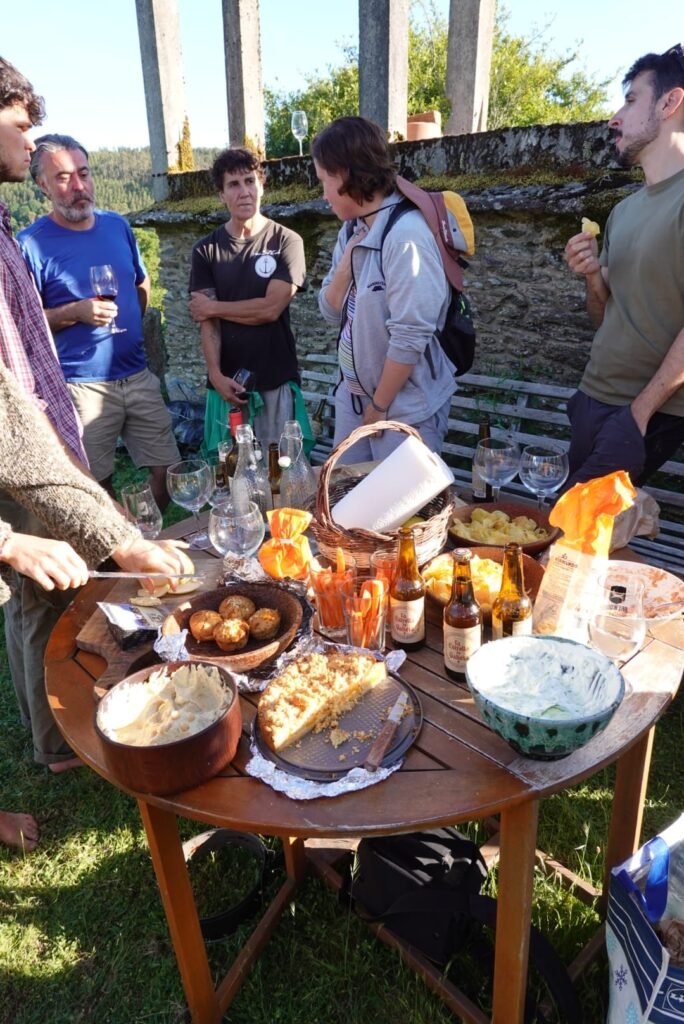
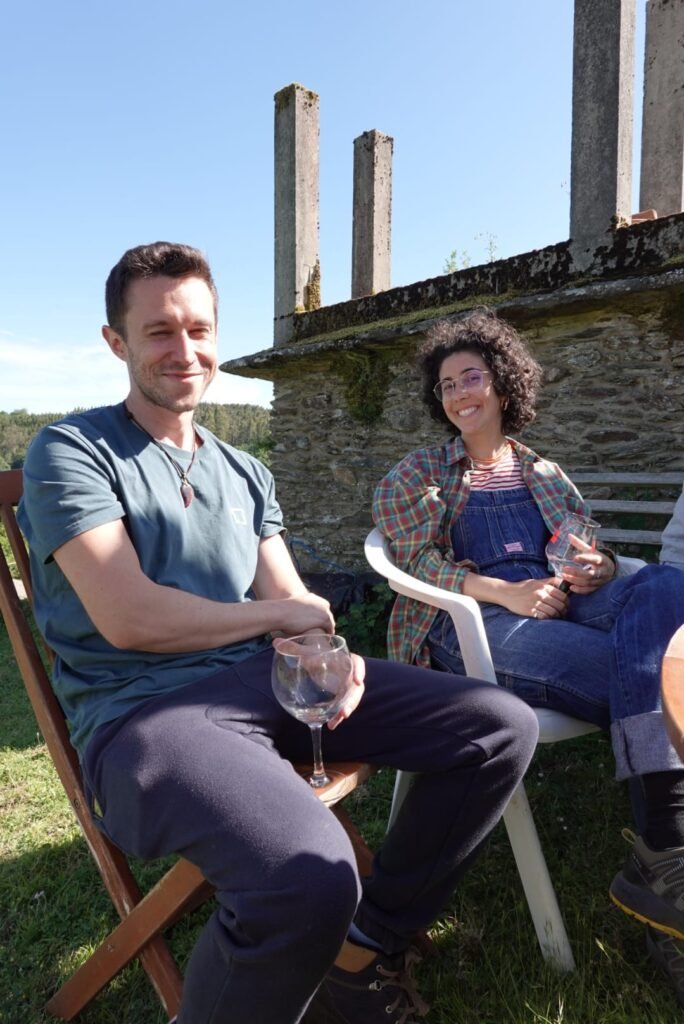
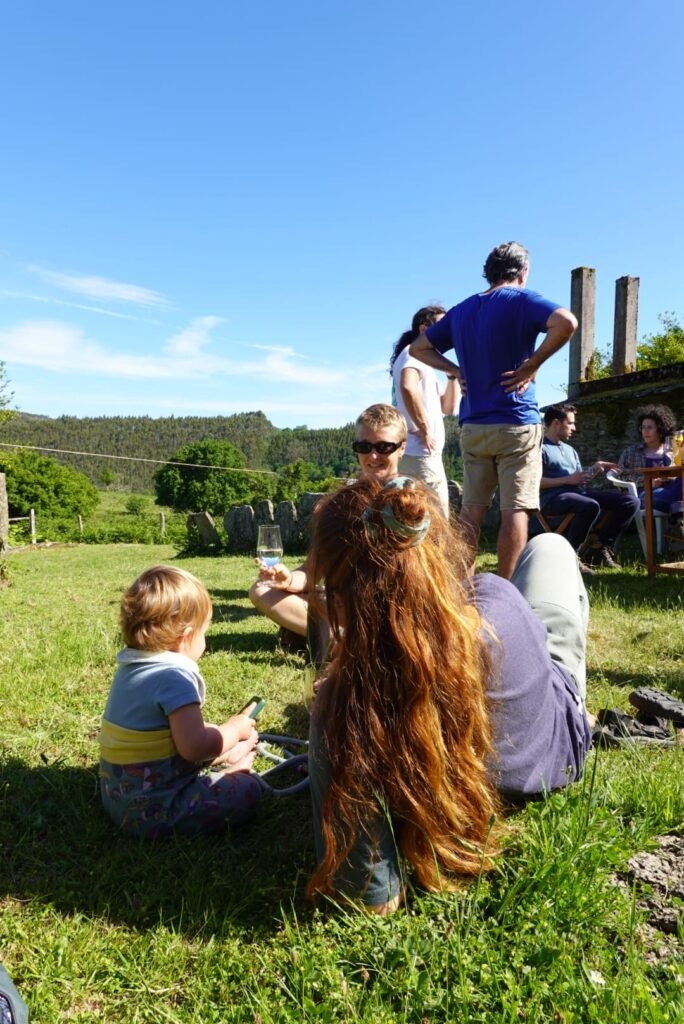
To close out the event, we gathered outside for a lovely picnic. Everyone stayed to chat, socialize, and reflect on everything we had seen. Slowly, one by one, our visitors started to head home.
By the end of the day, we had journeyed through four distinct, healthy ecosystems: the heathland, the semi-wild grazing land, the peatland, and the native Atlantic rainforest. It was a truly wonderful event, leaving everyone inspired by the visible, thriving success of Galicia’s rewilding efforts.