From the field to policy: what we learned from contributing to a UN report on youth-led ecosystem restoration.
Share This Post
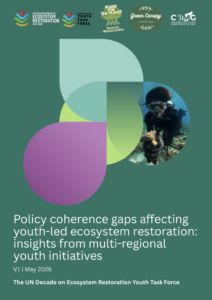
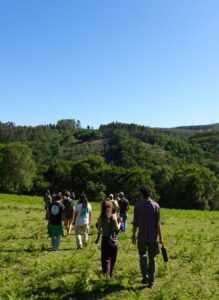
Through the UN Decade on Ecosystem Restoration Youth Task Force grant, we not only had the opportunity to organise two incredible rewilding activities, but also to contribute to the Youth Task Force’s latest report.
The aim of this part of the project was to better understand the systemic challenges young people face in ecosystem restoration and to compile these insights into a report, alongside practical recommendations for policymakers.
Most of our work at Sylvester happens on the ground. We spend our time organising activities, restoring landscapes, building community, and trying to create tangible change in our community. Taking a step back to look at some of the broader challenges we have encountered through a policy lens was therefore a refreshing change of perspective.
As part of the report, we took part in a series of interviews with other young NGO leaders from across Europe, sharing experiences from our own restoration work. Similar conversations were held with youth leaders from Africa, Asia-Pacific, Latin America and the Caribbean, helping to build a broader picture of the realities faced by young people working in restoration around the world.
To deepen the insights gathered through these interviews, the research also included a literature review and an exploratory survey of youth-led restoration initiatives.
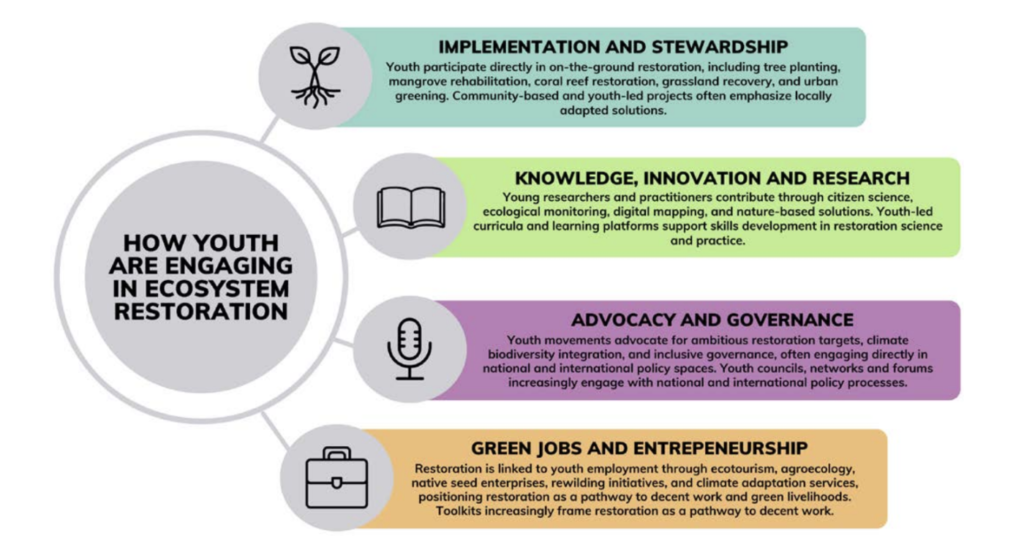
The report found that young people are already contributing to ecosystem restoration in many different ways: through hands-on restoration work and stewardship, research and innovation, advocacy and governance, as well as green jobs and environmental entrepreneurship.
Pathways for youth engagement in ecosystem restoration. From "Policy coherence gaps affecting youth-led ecosystem restoration: insights from multi-regional youth initiatives" report.
At the same time, the report highlights a significant gap between policy and practice. While youth engagement is increasingly recognised in environmental strategies and policy discussions, young people often remain excluded from implementation planning, financing decisions, and long-term governance processes.
As the report states:
“Youth engagement should not be treated as an outreach activity or symbolic form of participation. It should be recognised as a core governance, implementation and investment priority within restoration systems.”
Perhaps unsurprisingly, financial barriers emerged as one of the most significant challenges facing youth-led restoration initiatives. The issue is not only the lack of available funding, but also the mismatch between short-term funding cycles and the long-term nature of ecosystem restoration. Many funding schemes support specific activities such as tree planting or infrastructure development, while providing little support for monitoring, capacity building, community engagement, or long-term stewardship — all of which are essential for successful restoration.
To address these challenges, the report calls for more accessible financing mechanisms, stronger institutional recognition of youth-led organisations, increased investment in long-term capacity building, and greater integration of Indigenous knowledge and community stewardship into restoration systems.
It also identifies five key priorities for policymakers:
Moving from symbolic participation toward shared governance
Shifting from short-term projects to long-term institutional investment
Recognising restoration as both an ecological and socioeconomic strategy
Strengthening locally embedded and community-led approaches
Building institutional systems that trust, resource, and legitimise youth leadership
Many of the findings resonated strongly with our own experiences at Sylvester, making it especially meaningful to contribute to this collective effort.
If you’re interested in the future of ecosystem restoration and the role young people are playing in shaping it, we encourage you to explore the full report here.