

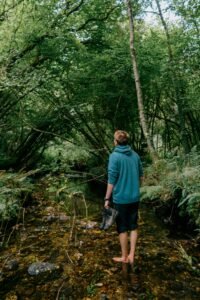
Fragas Atlánticas: Galicia’s Ancient Rainforests
Hidden in the valleys of Galicia grow Europe’s ancient Atlantic rainforests, rare ecosystems rich in life.
Hidden in the valleys of Galicia grow Europe’s ancient Atlantic rainforests, rare ecosystems rich in life.
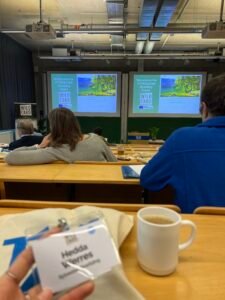
How much rewilding is Europe ready to accept? Reflections on passive rewilding, definitions, and the future of nature restoration.
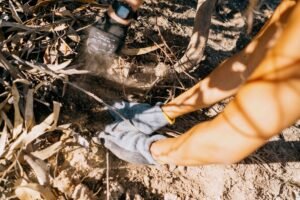
Taking action in nature doesn’t just heal ecosystems, it helps us reconnect, regain agency, and grow hope.
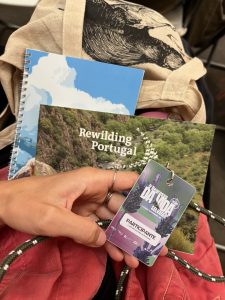
Across Europe, animals once thought lost are slowly coming back. Not through miracles, but through years of work, research, and a shift in how we think about nature. What does it take for wildlife to return?At the Portuguese National Rewilding Symposium 2025, held at Porto’s Galeria da Biodiversidade and organised by Rewilding Portugal, this question stood at the centre of the conversation. Researchers, practitioners, and conservationists from across Europe came together for two days to share experiences, challenges, and hopes under one theme: The Return of Wildlife.The phrase sounds romantic, but the stories behind it reveal how complex and interconnected this “return” truly is. Looking Back: The Story of Wildlife

One of our great adaptations, or frailties, depending on who you ask, is to understand the world by deduction. If you come across a new thing in the forest, you immediately, unconsciously assess it for its relative danger. How big? How fast? Does it have claws and growl? Yes, run! Your brain naturally figures out what to do by referencing what you’ve seen or heard before. It’s tempting to deduce and reduce everything like this, and we do, because it’s efficient for our brains. But deduction can betray us. When we reduce the world to neat categories without seeing relationships, we strip away context. And without context, without feeling connected
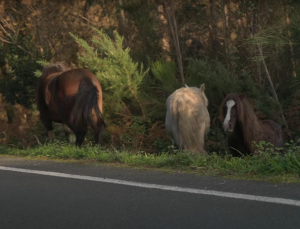
It’s a late autumn afternoon in Mañón, northern Galicia. We’ve just finished filming for our first crowdfunding campaign and are making our way back to the house. Julius, who’s driving, suddenly stops and points excitedly at the road in front of us. Three horses shyly cross the road before vanishing into the thick brush. Siggi who had jumped out of the car with his camera but returned disappointed. There’s no point in chasing them for the perfect shot, these horses are wild and keep their distance from humans. Well, to be precise, they’re semi-wild, as wild as horses can be in southern Europe today, but in Galicia, they’re more than
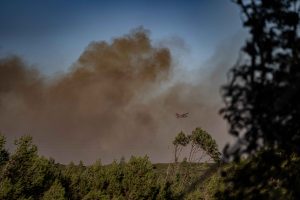
Year after year, southern Europe is experiencing extreme wildfires. With part of the Sylvester headquarters located in Portugal and our pilot project based in Galicia, Spain, the fires have been at the forefront of our minds since the very beginning. During our first Sylvester Week, a wildfire broke out right next to where we were staying on the very day we held our association’s founding assembly. The following year, the flames came so close to the homes of some of our team members that they had to evacuate. And this year, Portugal and Spain, especially Galicia, are facing what may be the worst wildfires to date, with no sign of

Portugal’s forests are at risk. We’re calling for sustainable fire policies to protect nature, climate, and biodiversity.

News that inspires action: Solutions journalism empowers readers to be part of the fight against climate change, the historic return of wild beavers in England and many more in this environmental good news summary of the month march.

Discover inspiring climate wins this month: renewable energy on the rise globally, 1 billion new trees for Denmark and stunning biodiversity finds in Peru!

Discover inspiring climate wins this month: a rewilding site saved, Paris combats pollution, UK bans single-use vapes, and bumblebee numbers soar in Scotland!

COP16 fell short on biodiversity action, leaving key goals unmet. Lacking concrete plans and funding, leaders must now find ways to turn promises into real protection.

Discover the latest in environmental protection and climate action in our roundup of important developments. This month, we found some marine life good news: a restored river hosts biodiversity again, a record of nesting Sea turtles has been found in Greece and citizen-scientists in Germany help to analyze the health of rivers with their volunteering work!

The 2024 Living Planet Report reveals a 73% drop in wildlife populations since 1970, urging urgent action to combat biodiversity loss and the climate crisis.

Exciting steps for nature: 500k oysters in the Humber, Spain’s 1st marine park, and eagles return to Cumbria. A global push for climate action is gaining momentum!

Discover Faixas Vivas, a project promoting sustainable fire prevention through biodiversity and the protection of Portugal’s native ecosystems.

Explore the nature/culture divide, its origins, and how rethinking this concept can reshape our understanding of humanity’s role in nature.

Discover the latest in environmental protection and climate action in our roundup of important developments. The Jackson Hole Travel & Tourism Board has launched an innovative Instagram filter, “Selfie Control,” to help visitors safely photograph wildlife by maintaining the correct distance. Meanwhile, the International Court of Justice is set to hold landmark hearings on global climate obligations, a case that could shape the future of climate litigation. In Sicily, a massive freshwater reserve has been uncovered beneath the Iblei Mountains, potentially offering relief from the island’s severe drought. Lastly, the EU’s LIFE programme has shown a tenfold return on investment, sparking calls for increased environmental funding. Dive deeper into these stories and their implications by exploring the full articles linked below.

Ever wondered how large herbivores like cattle, horses, and bison can transform entire landscapes? These gentle giants are more than just grazers—they’re nature’s landscapers, playing a crucial role in rewilding projects across Europe. From enhancing biodiversity to reducing wildfire risks, their impact is nothing short of remarkable. Discover how these animals are turning depleted areas into thriving ecosystems and why their role in our environment is more important than ever. Dive into the full story to see how big herbivores are reshaping the future of our natural world.

Discover August’s top environmental stories: wildlife encounters can boost your wellbeing, Copenhagen trials sustainable tourism program, Swiss seniors win historic climate case. Read more for the latest in biodiversity and conservation efforts.

Discover July’s top environmental stories: wild horses restore German mining sites, Medellín cools down with green spaces, the EU commits to nature restoration, and Sweden bans destructive bottom trawling. Read more for the latest in biodiversity and conservation efforts.
European bison roam Portugal once more and help capture and store atmospheric carbon in Romania, Welsh seagrass nursery flourishes, Curlew chicks return in Fota Island, Nature unveils a stunning Highland restoration, and a New Ally against Big Oil!

The forthcoming European Parliament elections play a critical role in determining our stance on climate change and nature conservation. With the EU’s legislation and subsidies exerting substantial influence, voting becomes imperative to ensure your voice is heard. Yet, the complexity of the EU and its parties presents a challenge in decision-making. To aid in this process, we’ve curated a guide detailing the parties’ stances on climate and nature issues, complemented by essential election process information.

A regenerative superpower against marine oil spills, Nature becomes a musician on Spotify and how volunteers improved water quality by planting one million mosses!

What if we simply buy land and rewild it? It’s a question many young people ask themselves. But how do you buy land for rewilding? From finding the right size for your rewilding project to how to finance it, we are sharing our top tips to look for land to rewild.

For young people and communities, getting into rewilding can often be difficult due to financial hurdles in acquiring land. Challenged by this, Sylvester Rewilding created a way to empower young people and communities to collectively finance, own, govern, and rewild abandoned land areas in Europe. Read about the journey bringing together Sylvester Rewilding and how it creates a new and revolutionary way to scale up rewilding.

Save the bumblebees! Sounds a bit funny, doesn’t it? Shouldn’t it be ‘save the bees’? Well, bumblebees are even more important than bees when it comes to pollination, ecosystem health, and the stability of our food system. Find out why.

Citizen science in Germany, community seed banks in Brazil and a whale thought to be extinct in the North Atlantic ocean – here are our environmental news of the month!

For “World Rewilding Day”- Week We asked our team what are their favourite rewilding books.
Here are the Sylvester Team top four recommendations.